
Jump First, Fear Later
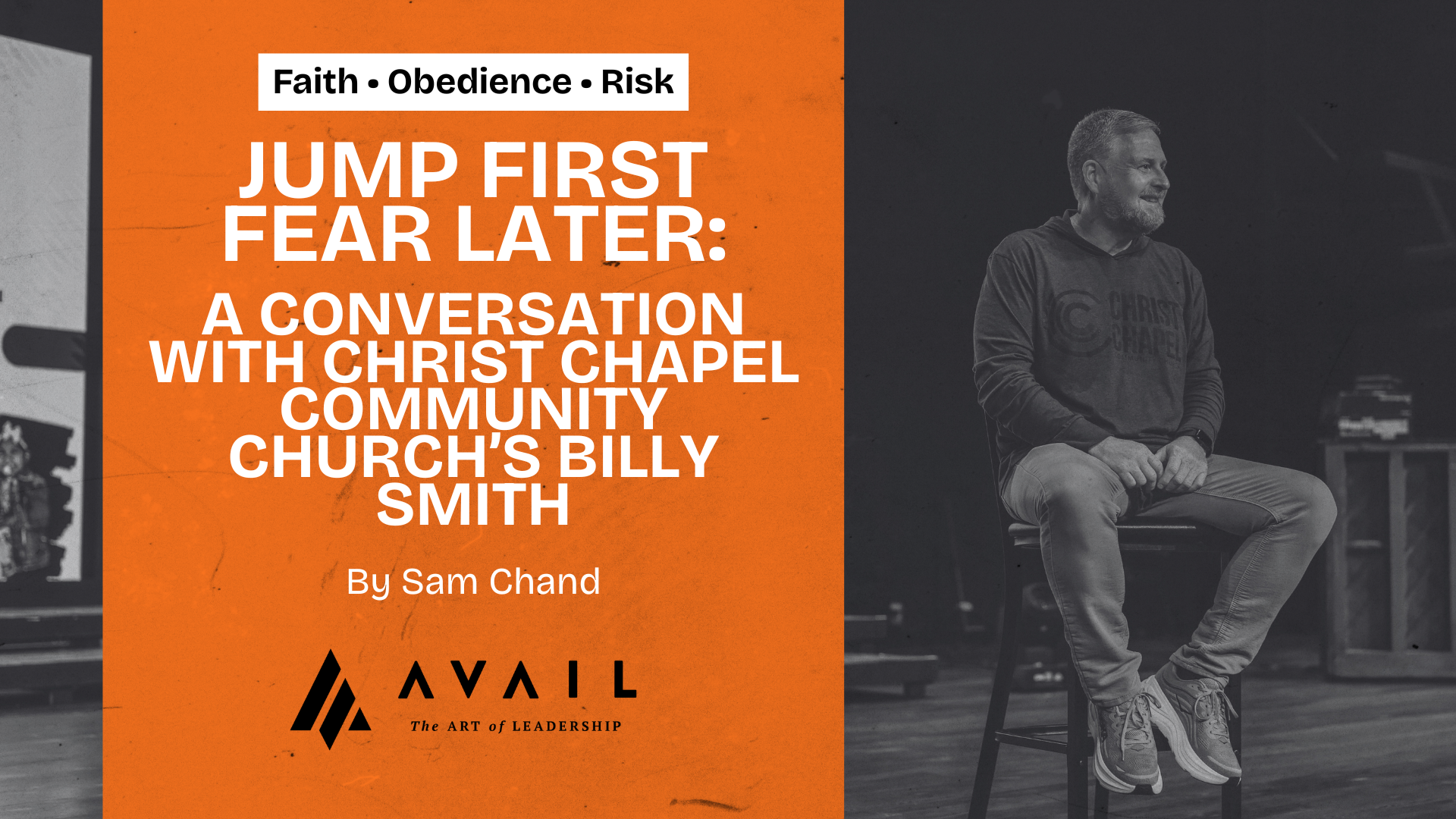
A conversation with Christ Chapel Community Church’s Billy Smith
By Sam Chand
With a population of fewer than 2,000, Zebulon, Georgia, may not seem like a strategic place to plant a new church, but it’s where Billy Smith felt called to start. Christ Chapel Community Church began meeting on the back porch of the Smith family home, and on its formal launch day, October 5, 2003, more than 80 gathered in attendance.
Now with seven campuses throughout Georgia and one in Honduras, Christ Chapel has grown to 4,500, and the campus in Hampton, Georgia, led by Hugh Smith, is my home church. Under Billy Smith’s guidance, leaders are multiplying, locations are increasing and the kingdom of our Lord is advancing. It is my honor to serve in a growing healthy church ecosystem. I believe you’ll enjoy Pastor Billy’s candor and helpfulness in this latest edition of “Founding Faith.”
Sam Chand: How did you experience God’s call to plant a church? How did He speak to you, and how did you obey?
Billy Smith: Everything in our lives seemed to be falling into place prior to our call. Our plans were working, opportunities kept opening and the business we owned was thriving. Jesus, however, kept stirring something deeper in our hearts. We felt an unmistakable conviction that we were meant to plant a church and abandon our current life. No matter how hard we tried to ignore it, the call simply wouldn’t go away.
Sam: How did He speak?
Billy: It wasn’t a booming voice from the sky commanding us to start a church. Instead, it was something far deeper—an unmistakable stirring in my spirit. It was powerful, undeniable and impossible to ignore. It took Tina several months to feel ready for such a major step, uprooting our family and stepping into the unknown. Once she sensed God’s call for herself and said yes, we moved forward together without hesitation.
We sold our house and loaded everything we owned into a U-Haul. We packed up our lives and walked away from everything familiar. We laid down a comfortable, secure lifestyle and stepped into the unknown.
We took out a loan, found a place that needed renovation and poured ourselves into it. We trusted. We risked. We chose faith over fear again and again. And in that place of obedience, God began connecting us with remarkable people to walk this journey with us.
Sam: Can you tell us a highlight (and a “lowlight”) of the first few years?
Billy: My most meaningful highlights didn’t come early on—they center around my family. My father served on the Christ Chapel Zebulon campus team later in his life, after spending more than 50 years in fulltime ministry. He led our senior adult programs and supported pastoral care for our church members.
My brother, Hugh, now serves as the campus pastor at our Hampton location. Our oldest son, Cole, is the campus pastor in Barnesville, and our daughter Lainey serves as one of the kids’ pastors on the Zebulon team as well.
One of the hardest moments in the early days came when I realized that not every pastor would celebrate the birth of a new church. I was naïve. I genuinely believed that anyone committed to kingdom work would be excited to see another ministry take root.
I met with several local pastors to share the vision and mission of the church plant, reassuring them that we weren’t targeting their congregations or trying to pull people away. Even so, the backlash caught me completely off-guard. That season taught me a great deal about what I never wanted to become as a leader.
For clarity, we did not split or divide a church to start Christ Chapel. Our previous ministry role had been in a church more than an hour’s drive away, so the negative reactions were confusing and painful.
A word of caution: if you divide a house in order to start a church, you invite that same spirit of division into your own house from day one. Be careful. Examine your motives. The foundation you build on matters.
Sam: What do you wish you had known then that you know now? What would you do differently? What would you do the same?
Billy: I wish I had understood the depth of the faithfulness of God. Unfortunately, to truly understand His faithfulness you must have history with Him, and there is only one way to acquire history—time. One of the most interesting things about divine faithfulness is that it’s often recognized in hindsight. As I look back over the last 20-plus years, these thoughts come to mind concerning His faithfulness: “I didn’t see it then, but I see it now.” “That closed door protected me.” “That delay shaped me.”
Faithfulness isn’t always loud. Sometimes it’s quiet, subtle and only visible with time. God keeps promises even when they take time to unfold. He remains present in suffering, not just in blessing. He forgives repeatedly, even when we fall short. His faithfulness is tied to His character, not to my performance.
If I could go back, I would slow down and enjoy the journey. Enjoying the journey is about being present instead of constantly projecting into the future. Slowing down allows you time to let yourself breathe instead of bracing for the next big thing. I wish I had understood the significance of the process, not just the outcome. I wish we had celebrated more!
As far as something I would do the same, I’d take the risks again! Faith itself is a kind of risk—trusting what you can’t fully see. Staying safe feels good, but it rarely leads anywhere new. Risk is bold, it’s disruptive and it pushes you out of the comfortable middle ground where nothing grows. God honors calculated risk! We often say around our church, “Jump first and later. Fear is temporary and regret is forever.” I am amazed at how often God showed up when we took risks, dreamed bigger, gave lavishly and from lack and simply believed all things are possible through Him!
Sam: How did church planting affect your family—marriage, children, extended family?
Billy: Our two oldest children essentially grew up alongside the church. They were just 5 and 1 years old when we planted it, so in many ways the church became like our third child. It brought proud moments, discouraging moments and plenty of confusing ones that made us question our sanity at times—but it also brought us tremendous joy.
Planting the church didn’t just test our faith in God; it tested Tina’s and my faith in each other—the stretching, pruning, growth and hardships we walked through ultimately strengthened our trust in God and deepened our commitment to one another. We have walked out the journey of Christ Chapel at a team.
Sam: What would be your top three counsels for those considering planting a church?
Billy: Count the cost. Following Christ and answering His call often comes with a high cost. If you’re stepping out to plant a church, you can expect spiritual, emotional and even financial challenges along the way. When we launched Christ Chapel, there was no ARC model, no streamlined process and no proven playbook to follow. In fact, back in 2003, nearly 80% of church plants didn’t make it past five years.
Thankfully, the church world has learned a lot since then. New strategies and support systems have dramatically improved those odds. But even with all the progress, planting a church from the ground up is still hard work. There will be days when quitting feels easier than continuing. In those moments, anchor yourself in your “why.”
Strive for consistency over perfection. You show up, you do the work and you trust that the small, repeated actions will compound over time. Progress isn’t always visible at first, but you keep going because you understand that growth often happens beneath the surface long before anyone can see it.
It’s like a seed planted in the soil—hidden, unnoticed and developing quietly without applause. Yet in time, what was buried breaks through the ground, grows and becomes something strong and recognizable. What begins in obscurity doesn’t stay there forever. “Being confident of this, that He who began a good work in you will carry it on to completion until the day of Christ Jesus” (Philippians 1:6).
Focus on what you can control, and trust God with everything else. Put your energy into the habits, choices and actions that genuinely move you forward. Don’t drain yourself worrying about outcomes you can’t fully shape. Do your part—and trust God with everything that lies beyond your reach. As Arthur Ashe wisely said, “Start where you are. Use what you have. Do what you can.”
Sam Chand is a leadership consultant and the author of numerous books, including his most recent title, Voices: The Power, Pain, & Purpose of Voices. Sam is the founder of Dream Releaser Enterprises and the publisher of AVAIL Journal.

Stay up-to-date with all our upcoming releases!
Join our mailing list to receive the latest news and updates from us. Your information will not be shared.

Recent Posts

